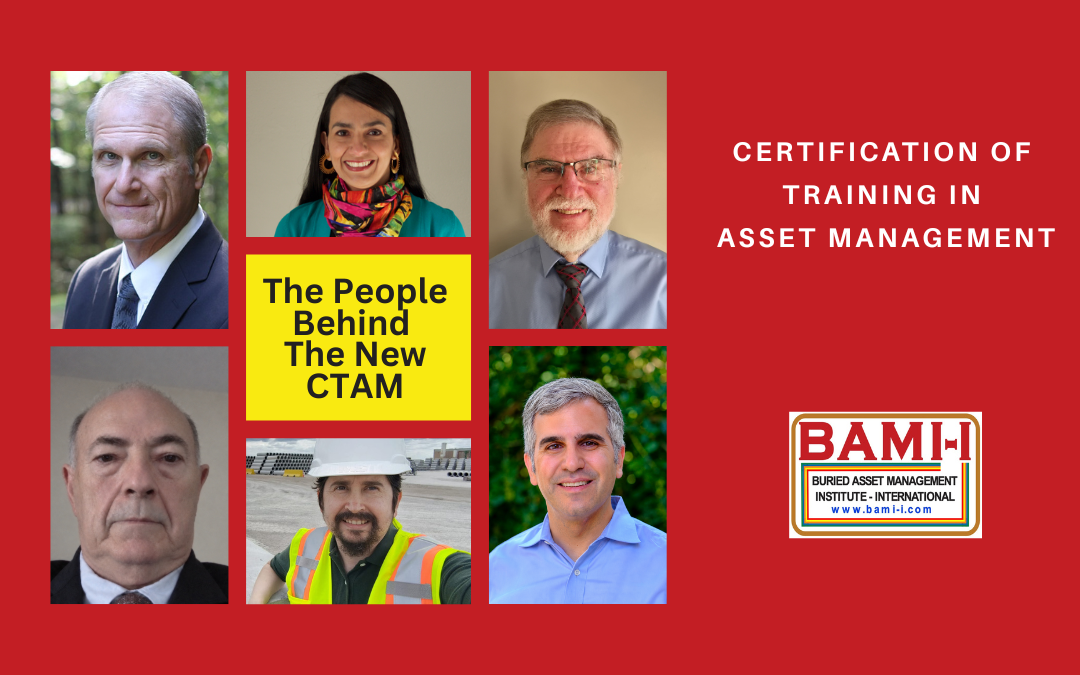
A group of industry experts have revised, rewritten, and expanded BAMI-I’s buried asset management curriculum, supported by program leadership and practical review. Here is what changed, and the people whose experience is shaping the program.
A buried pipe does not announce its remaining service life or tell the utility that owns it which asset needs attention first. Answering those questions takes more than an inspection. It requires reliable records, an understanding of condition and performance, and the judgment to decide what action is needed, when to take it, and how to pay for it.
Connecting those steps—look, record, assess, decide, fund, and follow through—is at the heart of buried asset management. It is also the purpose of BAMI-I’s Certification of Training in Asset Management, better known as CTAM: helping utilities turn knowledge of their underground systems into practical management decisions.
That purpose has roots in the work of Dr. Tom Iseley, BAMI-I’s founder and a driving force behind the creation of CTAM. BAMI-I was established in 2003 to bring greater attention to buried infrastructure, and CTAM 100 was introduced in 2010, followed by CTAM 200, 300, and 400 between 2013 and 2015. The series created a structured way to connect underground asset knowledge with planning, management, and financial decisions. Iseley continues to provide overall direction and senior advisory guidance, maintaining the program’s connection to its founding purpose while supporting its continued development. His legacy is not simply the establishment of a course, but the continuing effort to bring practitioners’ knowledge into education that utilities can use.
CTAM also provides the educational foundation for BAMI-I’s Associate Water Asset Manager (AWAM) and Professional Water Asset Manager (PWAM) credentials, with certification subject to the respective application and experience requirements. The updated program is expected to open by the end of 2026.
This update builds on that foundation rather than discarding it. The work includes a rewritten introduction, more developed treatment of water and wastewater systems, expanded inspection and rehabilitation content, and stronger connections between technical findings and implementation. The distinct operating conditions, assessment methods, and intervention choices of pressure and gravity systems receive more explicit attention. Financial instruction addresses not only funding sources, but revenue sufficiency, affordability, and the difficult task of presenting a defensible investment proposal to a governing body.
The delivery is evolving as well. As Jim Harris, who chairs the curriculum update committee, puts it: “COVID taught us that we can train virtually.” The updated material is being organized to support virtual instruction, while live classroom training remains an option, particularly for organizations seeking group training.
Wei Liao, CTAM Course Director, has led the coordination and integration of this update, working with Iseley and the committee chaired by Harris. Her work includes organizing contributors, reviewing instructional materials, restructuring content across CTAM 100–400, reducing duplication, and addressing gaps with reference to applicable regulatory requirements, standards, and industry guidance. Building on the authors’ and reviewers’ contributions, her focus is to preserve CTAM’s technical depth, strengthen its distinctive emphasis on buried assets, and provide utilities with a coherent, practical pathway to develop and implement asset management programs.
Adam Hershberger, of the Alliance of Indiana Rural Water, has contributed a frontline operations perspective to the review. His feedback helps assess whether the material reflects the day-to-day realities of utility work and can be applied by the people responsible for operating and maintaining the systems.
The practitioners behind the updated material bring more than knowledge of methods and standards. They bring experience of how decisions are made in the field, what happens when an approach fails, and what it takes to turn a plan into sustained action. The six principal contributors profiled in the following pages share the experiences that shaped their work—and the lessons they want the next generation of asset managers to carry forward.
THE SIX CONTRIBUTORS
In the order of the curriculum they rebuilt
Kurt Wright: The Plan That Started With a Course
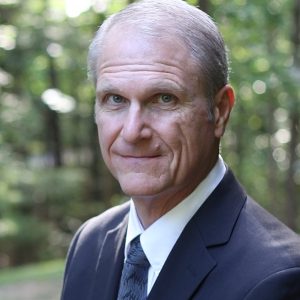
Kurt Wright can tell you the exact year his asset management career began: 2012, the year he took CTAM 100. He had just won the engineering contract to develop an asset management plan for the Town of Spindale, North Carolina. It was his first asset management plan, funded entirely by a state grant, and the guidance that came with the grant amounted to a couple of pages.
To understand what Wright took on, it helps to know Spindale. The town was once a thriving textile hub, and its wastewater system was built for that economy. Then NAFTA-era policy shifts hollowed out the mills, and Spindale began the slow transition toward a tourism-based economy. The infrastructure stayed behind – aging clay pipes and brick manholes, infiltration problems, mounting maintenance headaches – serving a town that no longer had a textile industry’s tax base to pay for it.
That was the situation in 2012, when Wright went looking for grant funding for sewer replacements and recognized that an asset management plan would strengthen the applications. He secured the funding and set out to write one. “At that time, no one in my engineering circles was talking about asset management planning,” he recalls. Nearly everything he needed to know – what an asset management plan was, how to build one – came from BAMI-I.
The result spoke for itself. When the North Carolina Division of Water Infrastructure approved the Spindale plan in 2013, the reviewer told him it was the best of all fifty asset management plans submitted that year. Wright credits BAMI-I for a share of that. The plan’s first priority was the rehabilitation of the town’s aging wastewater plant.
By then he was already giving back. The same year he took CTAM 100 as a student, he joined BAMI-I and assisted with the development of CTAM 200. He went on to complete all four CTAM modules, earn his PWAM certification, contribute to the CTAM 200 and 400 training manuals, and join the Board of Directors, where he has served through his retirement. Few people in the organization have touched as many generations of the curriculum.
Wright’s engineering roots go deeper still. A 1977 civil engineering graduate of UNC Charlotte, he founded his own firm in 2002 in Rutherford County, North Carolina – originally Kurt D. Wright & Associates, later renamed SDG Engineering – built around municipal water and wastewater work, from planning and design through grantsmanship, construction management, and startup.
And Spindale never left him. In 2024, SDG Engineering completed a comprehensive update of the plan, folding in the findings from several state-funded infrastructure projects along with new sewer assessments, smoke testing, and GIS updates, and laying out a long-term capital improvement plan for the town.
Which raises the question every asset management plan eventually runs into: who pays. Keeping the program funded meant raising rates, and it took careful financial modeling to balance those adjustments against what households could actually afford. It also took standing in front of the Spindale Board of Commissioners to make the case. Wright did not do that alone. Glenn Barnes of Water Finance Assistance had conducted the rate analysis on the original SDG team, and together they walked the commissioners through the options for putting the wastewater system’s enterprise fund on sound financial footing.
Wright presented the whole arc – the mill town, the grant, the plan, the rates – at the Global Buried Asset Management Congress in Indianapolis in November 2024, with Barnes alongside. His summary of the updated plan is characteristically dry: “It provides an excellent roadmap for the town, if they choose to follow it.” Anyone who has written a plan for a governing body will recognize the weight of that last clause.
What Wright learned in Spindale did not stay in North Carolina. When BAMI-I took on the Switz City project – building an asset management plan for a town of a few hundred people in rural Indiana, intended as a replicable model for small utilities across the state – Wright was part of the team. He conducted the comprehensive evaluation of the town’s wastewater treatment plant, identifying structural risks, operational bottlenecks, and aging components, with his findings and upgrade recommendations folded directly into the plan. He also stood in front of a different kind of audience: as a guest lecturer in Purdue University’s Asset Management of Underground Infrastructure course, where students worked in teams to develop asset management plans for Switz City. The engineer who once learned this discipline from a course was now teaching it through a live project.
For the CTAM update, Wright took on the module that started it all for him: CTAM 100. The original course was built on guidance nearly two decades old – a 2006 EPA cooperative agreement document. Rather than patching the old material, BAMI-I chose to write a completely new introductory text for the certification series. The rewrite closes a circle: the student of 2012 became the author of the new first course.
His diagnosis of the industry is blunt. A key reason American water and wastewater infrastructure is in such poor shape, he argues, is the absence of proper asset management. And when a utility director asks him why a team should invest time in it, his answer takes considerably less than the allotted minute: “Because you cannot afford not to.”
What has changed since 2012? “Back then, asset management was relatively new. Few engineers in my inner circles knew what it was. Now everyone does.” Spindale, for its part, has a roadmap. The town that lost its mills has something many larger utilities still lack: a purposeful accounting of every asset it owns, what condition it is in, and what comes next.
Kurt Wright, PE, BCEE, PWAM, was formerly Owner and President of SDG Engineering, Inc., founded in 2002. He retired in 2025 and continues to serve as a senior member of the BAMI-I Board of Directors. His GBAMC 2024 presentation on the Spindale AMP update is available at bami-i.com.
From Clay to Infrastructure Leadership: Smith Rangel’s Journey in Asset Management

Smith Rangel’s connection to buried infrastructure began long before it became the focus of her professional career. Her father, Roque Rangel, managed construction projects and often coordinated sewer and water service connections. Through those early experiences, she was exposed to the physical reality of buried infrastructure and the work required to build and connect the systems beneath our communities.
At the time, she was not thinking about engineering or infrastructure. What remained with her, however, was a lasting connection to the environment in which that work took place. “My fascination was playing with the clay that came out when they opened a trench. I could take that soft clay in my hands and mold it into anything my imagination could come up with. That was, for me, the best part of being there. That was my real gift.”
Only later did she begin to understand the broader significance of what she had been exposed to the trenches, pipes, and service connections that formed part of the infrastructure supporting communities. When her professional career eventually brought her to water and wastewater systems, the work carried a sense of familiarity. “I felt, in a way, that I was returning to something that had been part of my life all along. The difference was that now I could understand its importance, its complexity, and the responsibility involved in caring for it.”
“Looking back,” she says, “my story with buried infrastructure began long before my first professional project. It began with my father, an open trench, and probably a little clay between my hands that I could transform into anything I imagined. Perhaps that is one of the reasons why, so many years later, I still feel such a strong and very personal connection to this field.”
A civil engineer with a Master’s degree in Engineering – Project Management from the University of Maryland in College Park, Smith has worked with consulting firms and public utilities in both the United States and Latin America, supporting the Baltimore County Bureau of Utilities on infrastructure programs under the Baltimore County’s Consent Decree, and working with EAAB, the municipal water and wastewater company of Bogotá, Colombia. She is a NASSCO-Certified Trainer in PACP™, MACP™, and LACP™, serves on the BAMI-I Board of Directors.
That focus is reflected in her contribution to the CTAM 200 update. Her sections cover asset management planning, asset inventory and data management, condition assessment, and inspection, with particular emphasis on the process of turning field information into meaningful decisions. The update was needed, she says, partly because technology and inspection methods have evolved, but also because the industry’s understanding of asset management itself has matured. “A utility can have thousands of inspection records, but if the information is not consistent, reliable, properly managed, and connected to the asset inventory and decision-making process, its value is limited.”
For Smith, this principle is fundamental to effective asset management. The quality of a decision can never be better than the quality and understanding of the information behind it.
Over the years she has encountered utilities with years of inspection data, sometimes thousands of records, that were not consistent enough to support reliable comparisons or confident prioritization. In other cases, the technical information itself was good, but it was never properly connected to the asset inventory, the GIS, the risk framework, or the capital planning process.
Collecting data, she concluded, is only one part of the job. The information must also be understood: what it represents, how it was collected, what standards were used, how reliable and consistent it is, and perhaps most importantly, what decision the information is intended to support.
When asked about the classic situation in which the data indicates that an asset needs attention but no action follows, Smith does not reduce the issue to a single cause: It is rarely just the data, the budget, or the decision chain. Very often, the challenge is the translation: the information was never presented in a way that decision-makers could effectively use.
“A condition score by itself does not necessarily explain why an asset should be prioritized.”
Connecting condition to consequence of failure, risk, criticality, and service levels creates a stronger basis for decision making. For Smith, that is the purpose of asset management, not simply identifying assets in poor condition, but establishing a defensible process for determining what should be renewed, when, and why.
Her advice to young engineers follows the same principle: get out of the office. Spend time in the field, talk to operators and inspectors, look at the assets yourself, and question what the information is telling you.
The most valuable lessons of her own career, she says, did not come only from textbooks or classrooms. They came from seeing how infrastructure actually behaves, listening to the people who work with it every day, and understanding the consequences of the decisions made – or not made – based on the information engineers provide. “Technical knowledge will always be important, but the engineers who make the greatest difference are those who can connect the data, the infrastructure, the people, and the decision.”
Smith’s professional journey has taken her a long way from those early construction sites. Yet the connection remains. The clay may have been one of the first material she encountered beneath the surface, but her professional work today is focused on something far more complex: understanding buried infrastructure, the information that describes its condition, and the decisions that determine its future.
Smith Rangel, M.Eng., is a civil engineer with a Master’s degree in Engineering – Project Management (MEPM) from the University of Maryland, a NASSCO-Certified Trainer (PACP™, MACP™, LACP™), and a member of the BAMI-I Board of Directors, with experience across utilities in the United States and Latin America. She is a main contributor to the wastewater module update of CTAM 200.
Dr. Diego Calderon: Shaping the Future of Underground Infrastructure Management
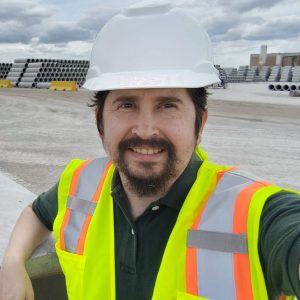
Diego’s introduction to buried infrastructure came in 2006, fresh out of a civil engineering degree, working as a field inspector on a vertical construction project that needed new water and sewer connections. He remembers watching a pneumatic piercing tool install water service laterals without tearing up the road, and being amazed –he says now, “without realizing it at the time, I was looking at two pillars of my career: buried asset management and trenchless technology.”
Two moments soon persuaded him towards the underground infrastructure management. The first was an industry trade show, in 2008, while performing research on asset management and trenchless technology at the Center for Underground Infrastructure Research and Education (CUIRE). At the show, the sheer intricacy of underground utility challenges, along with the ingenuity and variety of technical solutions, provided him with substantial reasons to stay engaged in this field. The second moment came during the financial crisis of that same year. Watching the recession hit sector after sector, he noticed that utility work held a strong position given its critical role in the nation’s economy and society. Water and wastewater systems are critical infrastructure; therefore, utilities must maintain their assets and deliver basic services regardless of any downturn. He had found a field that was both fascinating and essential.
The career that followed has encompassed a wide arrange of positions in the industry, including field engineer, project engineer, project manager, municipal engineer, researcher, university professor, and design engineer. Two of his experiences with asset management include his research work on asset management practices for culverts and storm sewers, and his role as project manager for the Office of Asset Management at the City of Baltimore Department of Public Works. It was then, about 15 years ago, when he noted that buried asset management was transforming from short-lived programs into dedicated business units. Today, Diego works as a senior technical consultant and subject matter expert in condition assessment and trenchless technology at Jacobs, and contributes to projects worldwide. A registered professional engineer in Georgia and Maryland and a NASSCO-Certified Trainer in PACP™️, MACP™️, and LACP™️, he has trained hundreds of professionals in the industry’s inspection standards.
For the CTAM update, Diego’s primary contribution is in the development of the CTAM 200 water module, which had identified needs and important gaps. The previous version of CTAM 200 only glanced at the asset management principles for water distribution systems, by merely mentioning scattered references through a manual whose framework and examples were mostly built around sewers. There was no dedicated attention to asset types, failure modes, and condition assessment practices specific to water distribution and transmission assets. Additionally, the previous CTAM 200 did not consider that water systems fail differently than sewers, and that they are inspected and monitored differently. The updated manual closes those gaps on condition assessment and asset management for water systems.
His one-minute pitch to an asset management director skeptical of CTAM takes the form of a question: wouldn’t you rather have your team anticipate major infrastructure failures before they happen instead of combating them reactively? Success there, he argues, is often a combination of experience, motivation, and informed decision-making. While the first two come from practice-oriented day-to-day work, the third comes from select education opportunities and targeted training.
Ask what he is excited about now and he reaches for a project that compresses part of his career into one job: the relocation of a stone sewer installed around the mid-1800s, that crosses five railroad tracks. Designing a new sewer through a densely populated historic neighborhood makes any project uniquely challenging. These conditions require careful prioritization of decisions and design needs, that are also clearly aligned with CTAM principles. The project involves targeted condition assessments, identification of ground conditions around the crossing, and the selection of trenchless technologies.
A century and a half separate the pneumatic piercing tool that started his career from the hand-laid stone sewer he is now working to replace. The discipline connecting them is the one he helped write into the new curriculum.
Dr. Diego Calderon, PE, is a senior technical consultant and subject matter expert in condition assessment and trenchless technology, and a NASSCO-Certified Trainer (PACP™️, MACP™️, LACP™️). He is a main contributor to the CTAM 200 course update and the primary contributor of the water module.
Jim Harris: Confessions of a Sewer Rat
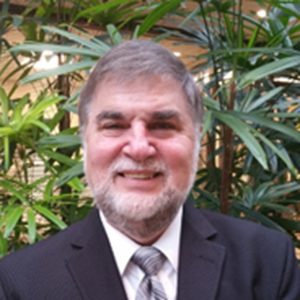
Jim Harris started in 1976 at McCullough Associates, a firm dedicated to performing Sewer System Evaluation Surveys the EPA required alongside treatment plant funding. This included manhole inspection above and below ground, flow isolation, smoke testing, CCTV – All output on paper – with calculations and recommendations on handwritten spreadsheets. “We were the first company in the US that used civil engineers to do this work,” he says.
There was a term he kept hearing in those early years: sewer rat. It described an almost immediate reaction people had to working in sanitary sewers. Some had it, many did not. “I was a sewer rat. It flowed through my blood.”
Fifty years later, that is still the most reliable way to understand Harris’s career. It carried him from the paper-and-clipboard era of McCullough through decades of collection system work, eventually to Jacobs Engineering, where he served as a Civil Engineering Specialist until retirement. Along the way he became one of the people the industry trusts to define what competent sewer evaluation actually looks like – chairing CTAM 300 on BAMI-I’s certification board, serving on its Board of Directors and on the NASSCO Board of Directors, and now chairing the committee overseeing the CTAM curriculum update itself.
But ask him what he is proudest of knowing, and he starts with what he got wrong.
Cost Effective Analysis was the standard of his era: estimate the infiltration and inflow contribution of each defect, compute the cost to transport and treat that flow, compare it against the cost of repair, and fix only the defects that penciled out. Sound economics was the rule, defect by defect. The whole industry ran on it.
It had two blind spots, and Harris names them without flinching. First, flow contributions could not be accurately estimated – the numbers underneath the analysis were softer than anyone admitted. Second, and more damning, nobody understood migration. Water shut out of one repaired defect did not go away. It moved downstream and found its way in through the next defect – the ones that had failed the cost-effectiveness test and were left alone. Project after project, I/I removal fell far short of the projections, and for years the industry did not understand why.
“From this we learned the need to rehabilitate comprehensively by area,” Harris says. One sentence, carrying a generation of corrected practice. It is the kind of lesson that cannot be derived from first principles in a classroom. Someone had to run the projects, watch the numbers disappoint, and figure out where the water went. Harris was one of the people who did – and that lesson now lives inside the material he teaches.
For the CTAM update, Harris carries a double load: he chairs the update committee guiding the entire revision, and he rewrote CTAM 300, the gravity pipe module – the course he has chaired on the certification board for years. Interestingly, his reason for the rewrite was not that the old material had fallen behind. “It was not so much that the old version had fallen behind but that we desired CTAM to be organized a bit differently,” he explains. CTAM 200 and 300 had grown to overlap too heavily, so the team simplified both. CTAM 200 now focuses on gathering the data to build an asset management plan. CTAM 300 focuses on using that data – recommending, prioritizing, and selecting rehabilitation and maintenance. The revision also folds in rehabilitation methods that did not exist in the original, and its most significant addition is a far more robust pressure pipe module.
The delivery changed as much as the content. “COVID taught us that we can train virtually,” Harris says. “The new material is organized to be taught virtually rather than in the live classroom.” Coming from a man whose first survey outputs were handwritten, the shift from classroom to screen registers as just one more format change in a career that has seen several.
Not that he has retreated behind a screen. Retirement, in Harris’s case, depends upon how you view retirement. He continues to teach BAMI-I and NASSCO -certified training around the country, including PACP TM – the Pipeline Assessment Certification Program that serves as the North American standard for coding the condition of wastewater pipes. There is a quiet symmetry in that assignment. In 1976, Harris was recording pipe defects on handwritten spreadsheets, in whatever format McCullough Associates had devised for itself. Today he teaches the standardized coding language that finally gave the whole industry one way to describe what a camera sees underground – the common vocabulary that makes modern condition data comparable, and asset management possible. The sewer rat, still making his rounds.
If a student takes one thing from the new CTAM, Harris wants it to be this: a utility needs to purposely consider every asset, know its condition, and know its next step. And his one-minute pitch to a skeptical asset management director is even shorter – these practices are simply the most efficient and frugal way to manage your assets.
His advice for young engineers goes to something underneath technique. Before they learn asset management principles, before they write or implement a plan, they need to understand why it matters. “A lack of understanding the significance of asset management will contribute to a lack of passion in what they are attempting to do, which will contribute to a lack of achieving effective results.” No passion, no results. The sewer rat’s syllogism.
As for CTAM itself, the man who helped build it offers a plain endorsement: a structured curriculum, written by recognized subject matter experts, that he considers one of the most effective ways to receive training in asset management. He would know. He has spent fifty years learning these lessons the hard way so that the next generation can learn them in a course.
Jim Harris is a retired Senior Project Engineer (Jacobs Engineering) and a member of the BAMI-I Board of Directors, and has also served on the NASSCO Board of Directors. He chairs the CTAM curriculum update committee as well as CTAM 300 on the certification board, and teaches BAMI-I and NASSCO-certified training nationwide.
Ron Thompson: Forty Years of Watching the Technology Catch Up

The camera could not even turn its head. When Ron Thompson started evaluating sewer systems in the 1980s, the state of the art was black-and-white CCTV with no pan-and-tilt, supplemented by flow monitoring and dye testing. The work itself was driven by P.L. 92-500 – the Clean Water Act – which sent a generation of engineers underground to conduct infiltration/inflow studies and Sewer System Evaluation Surveys. Thompson worked through system after system, assessing condition and running cost-effective evaluations for repair or replacement.
The pull toward this work started even earlier, in a cooperative education program during his engineering degree. Alternating quarters of school and work at an environmental consulting firm, he rotated through nearly everything the firm did: air emissions control for industrial clients, groundwater sampling, surveying, drafting, water and sewer plant design. The final work quarter landed him in sewer system evaluation – flow monitoring and CCTV – and that was the one that stuck. He has spent the four decades since watching the toolkit he started with become unrecognizable.
Which makes him a fitting author for the module he rewrote in the CTAM update: pressure pipe inspection technologies, an area that has changed as much as any in the field. The technologies for seeing inside a pressurized main barely existed when Thompson was feeding monochrome cameras into gravity sewers. Today they are an industry of their own, and the new CTAM had to reflect that.
Few people have watched CTAM itself evolve from closer range. Thompson’s involvement goes back to 2008, when CTAM 100 was still being developed – making him, among the current authors, the one whose history with the program runs deepest. He continued through the development of CTAM 200 in 2012, served on the certification board, and has taught in the classroom programs that compress all four modules into an intensive week. The early courses ran online; over the years he watched the program grow into both formats. When BAMI-I decided the curriculum needed rebuilding, he was one of the few people who had seen every version of it.
His own career carries a lesson he offers freely, because he learned it late. He spent over twenty years working and living in one place, hesitant to relocate when large project opportunities came up. When he finally started taking them, every move taught him new approaches and new skills. His advice now: evaluate the opportunities that come, even the ones with risk attached. The knowledge is worth the disruption.
The biggest of those moves came in 2020, when Waggoner Engineering acquired Applied Engineering & Science, the Alabama consulting firm where Thompson served as Vice President of Technical Operations. The acquisition brought AES’s water, wastewater, and asset management practice into Waggoner’s utility division. “We understood the culture, people, and the client service approach based on the many years of interaction in Mississippi and Alabama,” Thompson said at the time. “I look forward to creating new relationships and serving clients.” He carried his title with him, and today leads continued research on new technologies for field application and data processing – still doing, at Waggoner’s scale, what he started doing with a black-and-white camera.
His case for asset management is built on reliability. Ask him why a utility team should invest the time and he goes straight to outcomes: fewer catastrophic events, fewer unplanned shutdowns, fewer unplanned costs. Then he adds the benefit most people miss – a staff that develops a detailed understanding of its own system and its own jobs. Asset management, in his telling, is workforce development wearing a technical disguise.
If a student takes one thing from the new CTAM, he wants it to be the significance of life cycle cost and the long-term budgeting process. Not the inspection technology he has spent his career advancing – the economics underneath it. It is a telling choice from the toolkit man: the tools change every decade, but the discipline of thinking in decades does not.
His advice for young engineers comes in two parts, and both point at the same future. Technology never stops changing, so continued learning is critical to providing optimal solutions. And the education never stops flowing outward either – there is an ongoing need, he says, to educate political leaders and the public about what asset management is for and what it delivers. Forty years after P.L. 92-500 sent him into the sewers, Thompson is still working both ends of that equation: mastering the next technology, and explaining to the people above ground why it matters.
Ron Thompson is Vice President of Technical Operations at Waggoner Engineering and a senior member of the BAMI-I Board of Directors. He rewrote the pressure pipe inspection module for the updated CTAM and has been involved with the program since 2008.
Glenn Barnes: The Man Who Talks About Money
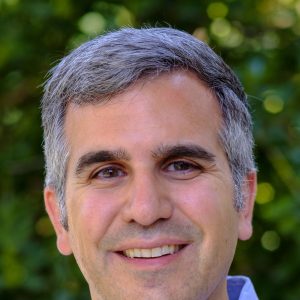
Every asset management program eventually arrives at the same uncomfortable place: someone has to pay for it. Glenn Barnes has spent his career standing in that place.
He came to asset management through a side door: rate studies. Beginning with his work with the Environmental Finance Center at the University of North Carolina in 2006 and continuing with his work with Water Finance Assistance since 2019, Barnes helped utilities figure out what their service actually costs and how to price it. Along the way he noticed a pattern. The utilities with an asset management plan could anticipate their future expenses. The ones without were guessing. Back then, most were guessing – especially the small systems.
The moment that anchored him in the sector came through an EPA-funded national training and technical assistance program for small water systems, which he co-directed from 2012 to 2019. The work took him across the country, meeting the people who run water systems in nearly every state and territory. “I was so impressed with their dedication to their communities. It was an honor to give even a tiny bit of support to them, and I knew I would stay in the sector for the rest of my career.”
One of the engineers he eventually ended up working alongside was Kurt Wright. Barnes conducted the rate analysis for the Spindale, North Carolina asset management plan on the SDG Engineering team, and together the two presented the town’s Board of Commissioners with options for putting the wastewater system’s enterprise fund on sound financial footing. In November 2024 they shared a stage again, presenting the updated Spindale plan at the Global Buried Asset Management Congress in Indianapolis. Two of the people rewriting CTAM had already spent years proving its principles in the same small town.
By then Barnes was deeply woven into BAMI-I’s work. In October 2024 he led the organization’s webinar on using asset management to move utility leaders to action – teaching exactly the skill he considers most undervalued in the profession: translating technical findings into arguments a governing board will actually act on. And when BAMI-I launched its most ambitious small-utility effort, the Switz City asset management project in Indiana, Barnes was on the team. Water Finance Assistance conducted the water and wastewater rate study for the town – a community of a few hundred people with its own treatment plant and distribution system – assessing whether the existing rate structure made sense for its customer base, and proposing a phased financial strategy that spreads the long-term investment across annual budgets while diversifying funding sources. Readers of this journal may remember his account of that rate study from a previous issue.
For the CTAM update, Barnes rewrote CTAM 400 – the module on how to pay for everything the other modules teach you to find. Much of the old version’s utility finance material held up and was retained. What the new version stresses is a truth many boards would rather not hear: customer charges, largely through debt service, are what will pay for infrastructure projects. New sections cover affordability and, crucially, how to approach a governing body about the rate increases an asset management program requires.
That last part he learned the hard way. He has watched boards refuse to take on necessary projects unless a grant appeared. Grants are rare. Projects got delayed. Public health carried the risk. “Some governing bodies are unwilling to raise rates to pay for capital projects, even when they agree that the projects are necessary.”
Ask him where the system breaks – why the data says fix it and nobody does – and he does not hesitate: the decision chain. Implementing an asset management program’s findings usually means debt and rate increases, and the profession is not always honest about that. Nor does it explain inaction well. “It seems like deferring a capital project will cost the utility nothing, when in fact it may lead to a catastrophic asset failure, public health impacts, and increased future costs.”
If a student remembers one sentence from CTAM 400, he wants it to be this one: it is very likely you will need to raise rates to fund the capital projects your asset management program identifies.
His own firm, Water Finance Assistance, works on what he calls money and people problems. A recent project shows the money side in practice. His team ran a rate study for a wastewater utility in a low-income community with a shrinking population. The data analysis surfaced something nobody had put into words: for decades, those struggling households had been quietly subsidizing the utility’s three industrial customers, who paid no monthly base rate and the lowest volumetric rate of any customer class. When rates had to rise, the board had the evidence in front of it – and fixed the discrepancy. It is the kind of finding that stays buried until someone actually looks, and it is a fair summary of what Barnes believes data is for.
The people side is newer, and he is animated about it. The sector obsesses over retirements, Barnes argues, while overlooking the employees who are not retiring but might still walk out the door. Salary is part of why someone stays, but so are a career path and the relationship between an employee, their supervisor, and their colleagues. He and his partner Elora Arnette are building ways to measure all of it – a fuller picture of why utility staff stay or leave, for a sector that cannot afford to lose them.
His advice to young engineers has nothing to do with pipes, and everything to do with the rooms he has spent his career in. Learn to translate technical findings into something that inspires a board to act using plain language, aimed at what boards actually worry about: money, affordability, customer impact.
And his closing thought goes past the engineering entirely. Water and wastewater utilities allow communities to be healthy and prosperous, and the decisions made today determine whether that service continues. “Our children and our grandchildren are counting on us to get it right.”
Glenn Barnes is the Director of Water Finance Assistance, focusing on rates, affordability, employee development, and retention. He rewrote CTAM 400 for the updated curriculum and served on the rate study team for BAMI-I’s Switz City asset management project.
THE CTAM PROGRAM
Expected to Open By The End of 2026
The rewritten CTAM curriculum opens for enrollment by the end of 2026, organized for virtual delivery. Completing the series is the path to the PWAM credential, and the contributors profiled here are the people who wrote what you will be taught.
The rewrite is not treated as a finished object. BAMI-I’s working group reviews the curriculum edition by edition, so that what is taught keeps pace with what practitioners actually do.
For schedule, pricing and registration, visit bami-i.com.
Buried Asset Management Institute — International · bami-i.com
THE CTAM PROGRAM
Expected to Open in November 2026
The updated CTAM program is expected to open for enrollment in November 2026. The new curriculum is designed for flexible delivery, with virtual instruction as well as live classroom options for organizations seeking group training. Completing the CTAM series provides a pathway to the PWAM credential.
The curriculum will continue to evolve. BAMI-I’s working group will review and update the material regularly to keep pace with industry practice, emerging technologies, and lessons learned in the field.
More details on the program, schedule, pricing, and registration will be announced soon.
Stay tuned at bami-i.com.
Buried Asset Management Institute — International · bami-i.com
ACKNOWLEDGMENT
BAMI-I gratefully acknowledges all members of the CTAM Curriculum Update Committee for their time, expertise, and contributions to the development of the updated CTAM curriculum. BAMI-I also recognizes the authors and contributors who developed earlier generations of the CTAM curriculum, whose work established the foundation on which this update was built.
CTAM Curriculum Update Committee
- Jim Harris, P.E. — Jacobs (Retired)
- Kurt Wright, P.E., BCEE, PWAM — SDG Engineering (Retired)
- Smith Rangel, M.Eng.
- Diego Calderon, Ph.D., P.E. — Jacobs
- Ron Thompson, P.E., MBA— Waggoner Engineering
- Glenn Barnes — Water Finance Assistance
Adam Hershberger — Alliance of Indiana Rural Water - Wei Liao, PWAM — Purdue University / BAMI-I
- Tom Iseley, Ph.D., P.E., PWAM — Purdue University / BAMI-I
Greg Jeffries — IMEG Corp - Leonard Ingram — ENGCONCO (Retired)
- Richard Thomasson, PWAM — Arcadis U.S., Inc. (Retired)