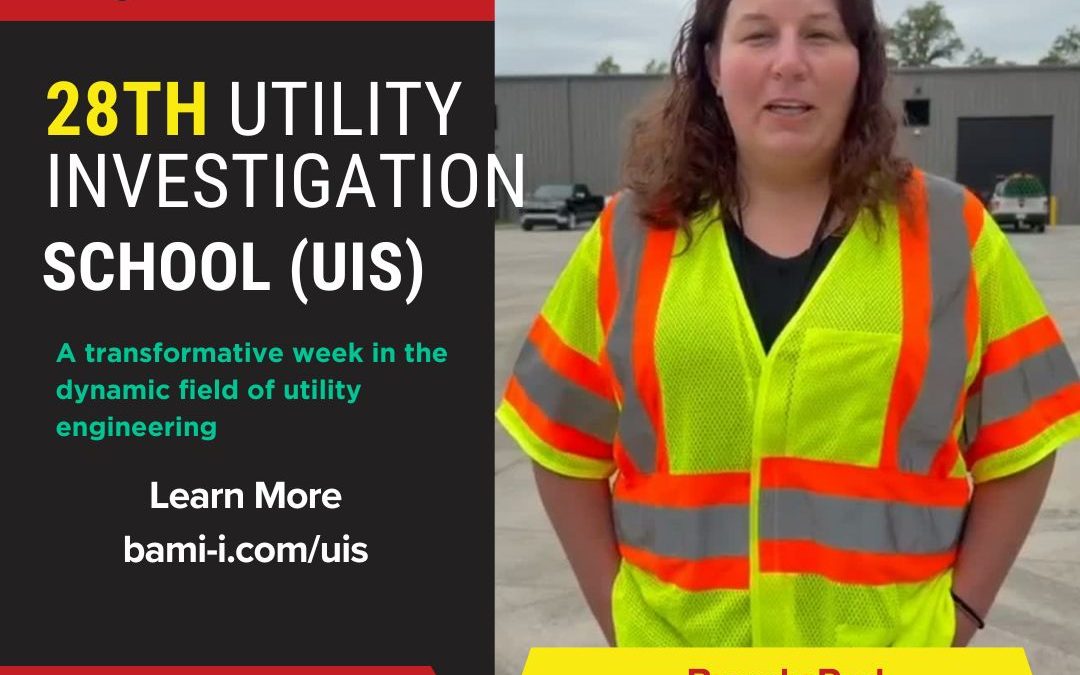
When 811 field marks fail to align with subsurface utility engineering data, project designs inevitably stall. During an interview at BAMI-I’s Utility Investigation School (UIS), Brandy Red, a Utility and Railroad Coordinator at the Indiana Department of Transportation (INDOT), explained how mastering these data discrepancies transforms day-to-day field efficiency.
By understanding exactly how locators and surveyors operate their equipment and capture subsurface data, utility coordinators can eliminate guesswork, resolve conflicts faster, and ensure seamless project execution. This operational alignment directly supports one of BAMI-I’s core industry scopes: Collaboration and Utility Coordination, which involves working with various stakeholders, government agencies, and utility providers for coordinated and efficient asset management.
The Legacy of the Utility Investigation School
The Buried Asset Management Institute – International (BAMI-I) is a non-profit 501(c)(3) organization dedicated to advancing underground infrastructure stewardship. First offered in 2016, the UIS program was brought to BAMI-I through the leadership of Course Director Tom Iseley, utilizing the authoritative curriculum developed by industry pioneer Jim Anspach. Anspach specifically authorized BAMI-I to manage and continue this course over other competing organizations, ensuring the industry standard remains rigorous and accessible.
Today, the UIS program serves as the premier training ground for bringing design, survey, and engineering teams onto the same page, preventing the costly utility strikes that derail municipal and DOT project budgets.
Secure your spot at the next Utility Investigation School (UIS)