By BAMI-I Journal Editor: Wei Liao
In the southwest corner of Indiana lies Switz City, a town of 268 residents that has taken an unusual path over the past two years. Once reliant on a “fix it when it breaks” approach, the community has now moved toward a data-driven Asset Management Plan (AMP) for its water and wastewater systems.
The project, led by the Buried Asset Management Institute–International (BAMI-I) in partnership with the Alliance of Indiana Rural Water (AIRW), Purdue University’s Underground Infrastructure Team (Purdue UIT), Bynum Fanyo Utilities (BFU) and several technical and financial partners, spanned two and a half years (January 2023–July 2025). It began with no startup funding—built instead on volunteer contributions—before securing funding in support from the Indiana Finance Authority (IFA) to complete system assessments and develop a comprehensive plan.
What makes this effort noteworthy is not only the outcome, but also the model it represents for other small communities:
- Phased implementation: an initial stage to establish baseline data, followed by a funded stage for full-scale technical execution.
- Cross-sector collaboration: pooling resources from academia, industry, and government to lower barriers for small utilities.
- Integration with education: Purdue students engaged with the case study as part of their coursework, blending classroom learning with real-world application.
- Risk-based planning: adapting IFA guidelines to produce a locally tailored 20-year capital improvement and financial plan.
The final AMP addressed both water and wastewater systems, identified high-risk assets, and laid out a 20-year investment roadmap. For the Town of Switz City, it offers a blueprint for the future; for Indiana, it provides a timely reference as AMP requirements become mandatory under HB 1459 (2025).
Origins and Policy Context: From the IFA Guide to SEA 272 (2022)
For years, many small and mid-sized Indiana communities faced the same challenge in their water and wastewater systems—“repair, but not manage.” Aging facilities, reactive maintenance, and the absence of long-term planning drove up repair costs, reduced service reliability, and heightened public-health and environmental compliance risks.
To respond, the Indiana Finance Authority (IFA) issued an Asset Management Plan (AMP) Guide in 2019, providing a framework and roadmap for utilities: asset inventories, condition assessment, prioritization, life-cycle cost control, and long-term financial planning.
However, many small utilities—hampered by limited funding, staffing shortages, and knowledge gaps—struggled to advance AMPs. The state recognized that voluntary participation and financial incentives alone would not achieve widespread capacity building.
A turning point arrived in March 2022: SEA 272 required that, after June 30, 2023, utilities must have an approved AMP to be eligible for State Revolving Fund (SRF) loans, grants, and other state funding. AMP thus shifted from “advocacy” to a prerequisite for funding, directly shaping and propelling the Switz City project.
Project Initiation
Against this policy backdrop, BAMI-I introduced AMP training at the Alliance of Indiana Rural Water (AIRW) annual conference in fall 2022 and formed an intent to collaborate with Ziptility. Both parties recognized the bottlenecks small communities faced implementing the IFA Guide, and agreed to start with a pilot to capture methods and lessons.
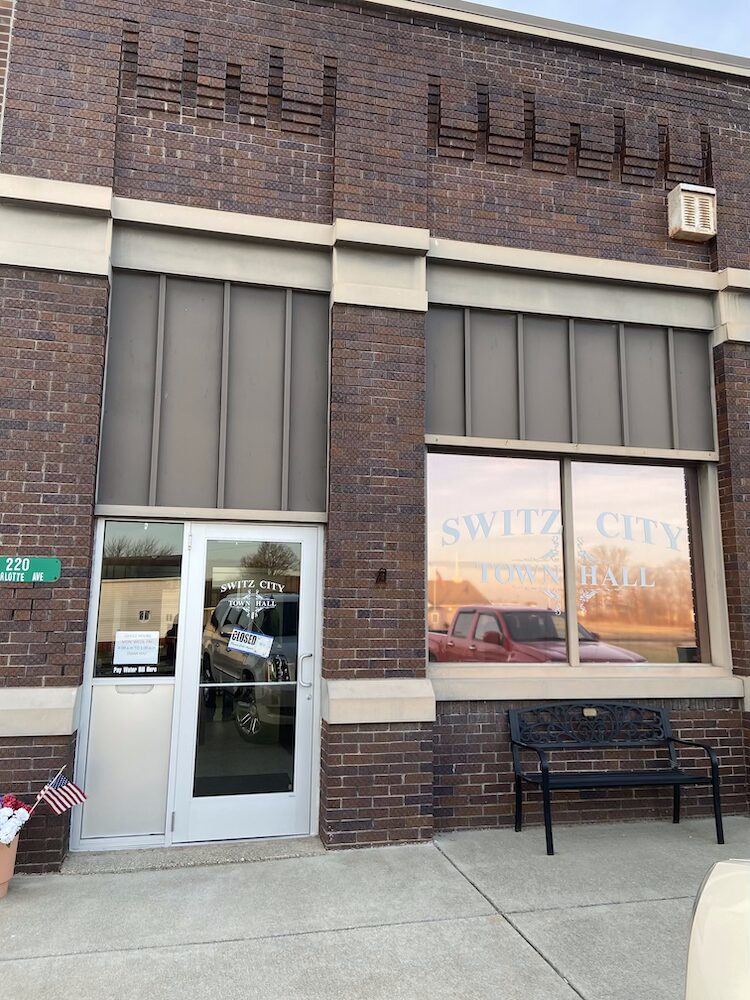
Switz City—with a population of 268, operating both drinking water and wastewater systems, and relying on contract operations—was an ideal demonstration site. In January 2023, the Town Council authorized BAMI-I to lead the project; Ziptility and Bynum Fanyo Utilities (BFU) provided field and technical support; project management was handled primarily by Purdue UIT, who provide administrative services to BAMI-I. This decision launched the Switz City AMP and a cross-sector collaboration that began with volunteer contributions. As Adam Hershberger moved from Ziptility to AIRW, AIRW formally joined the collaboration, adding resources and support.
Phasing: Volunteer Phase / Formal Execution Phase
- Volunteer Phase (Jan 2023–June 2024): A self-initiated effort to establish the technical framework, build the data foundation, complete preliminary inspections, and earn community trust.
- Formal Execution Phase (July 2024–present): $650,000 from IFA enabled full-scale inspections, in-depth assessment, financial planning, and emergency project activation.
Notably, after the project entered formal execution, HB 1459 (2025) elevated AMP requirements beyond SEA 272’s funding condition to a mandatory regulatory framework under
Indiana Utility Regulatory Commission (IURC). This means Switz City’s experience meets current compliance needs and provides a replicable reference for statewide mandatory implementation.
Volunteer Phase (Jan 2023–Jul 2024)
This phase was entirely pro bono, initiated by a core team from BAMI-I, Ziptility, AIRW, and BFU, and soon joined by subject-matter experts and Purdue graduate students in Civil Engineering and Construction Management. The goal was to create a practical AMP framework and data foundation for Switz City—and build trust with the community.
Key outputs and activities
- Technical framework: Based on the IFA 2019 AMP Guide and industry best practices, the team established a risk-based AMP methodology tailored to small systems, defining data collection, analytics, and prioritization routes.
- Data foundation: Integrated paper records, GIS, equipment inventories, and maintenance history to complete the core asset registry and spatial database, enabling higher-precision inspections and financial modeling.
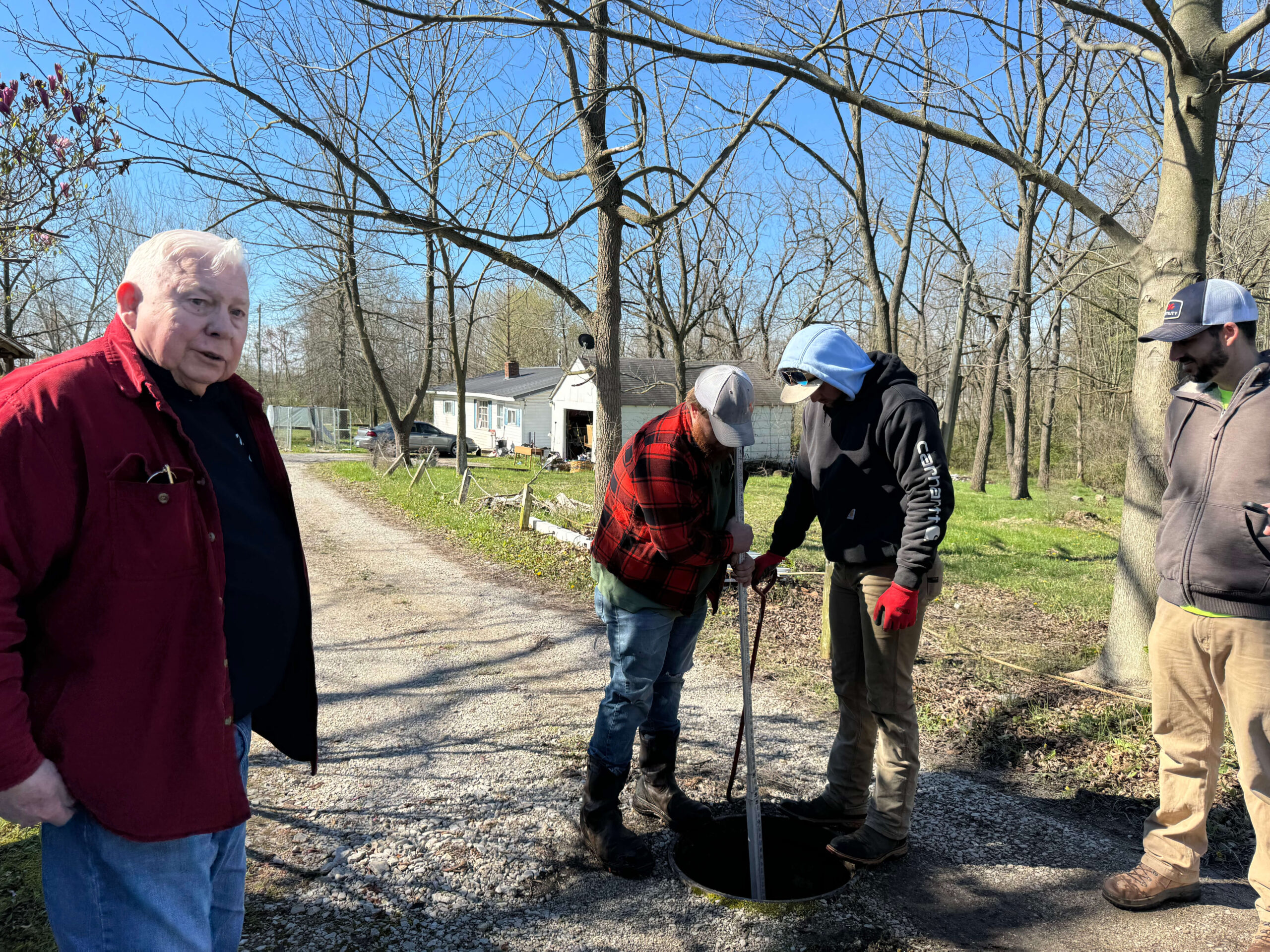
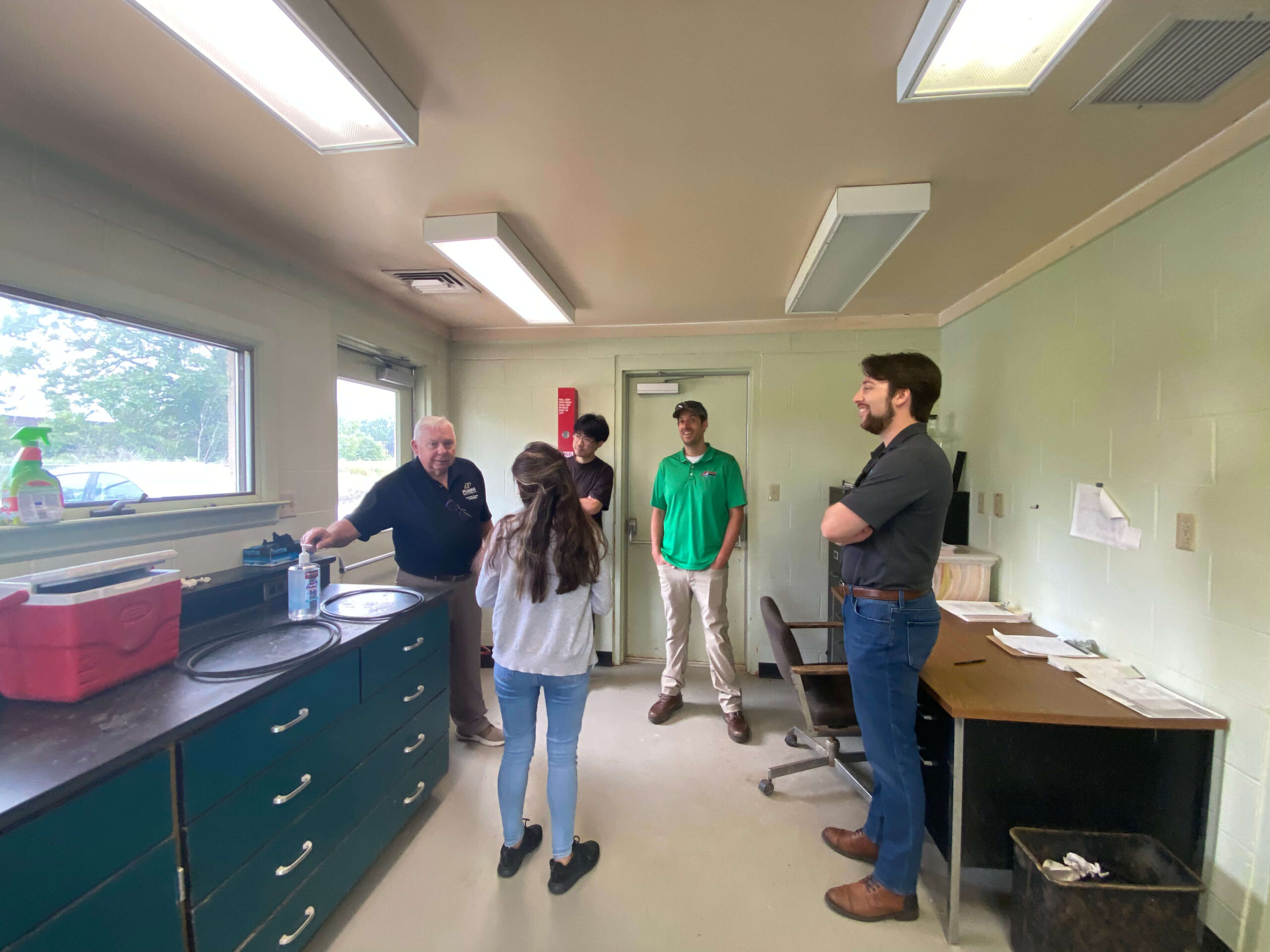
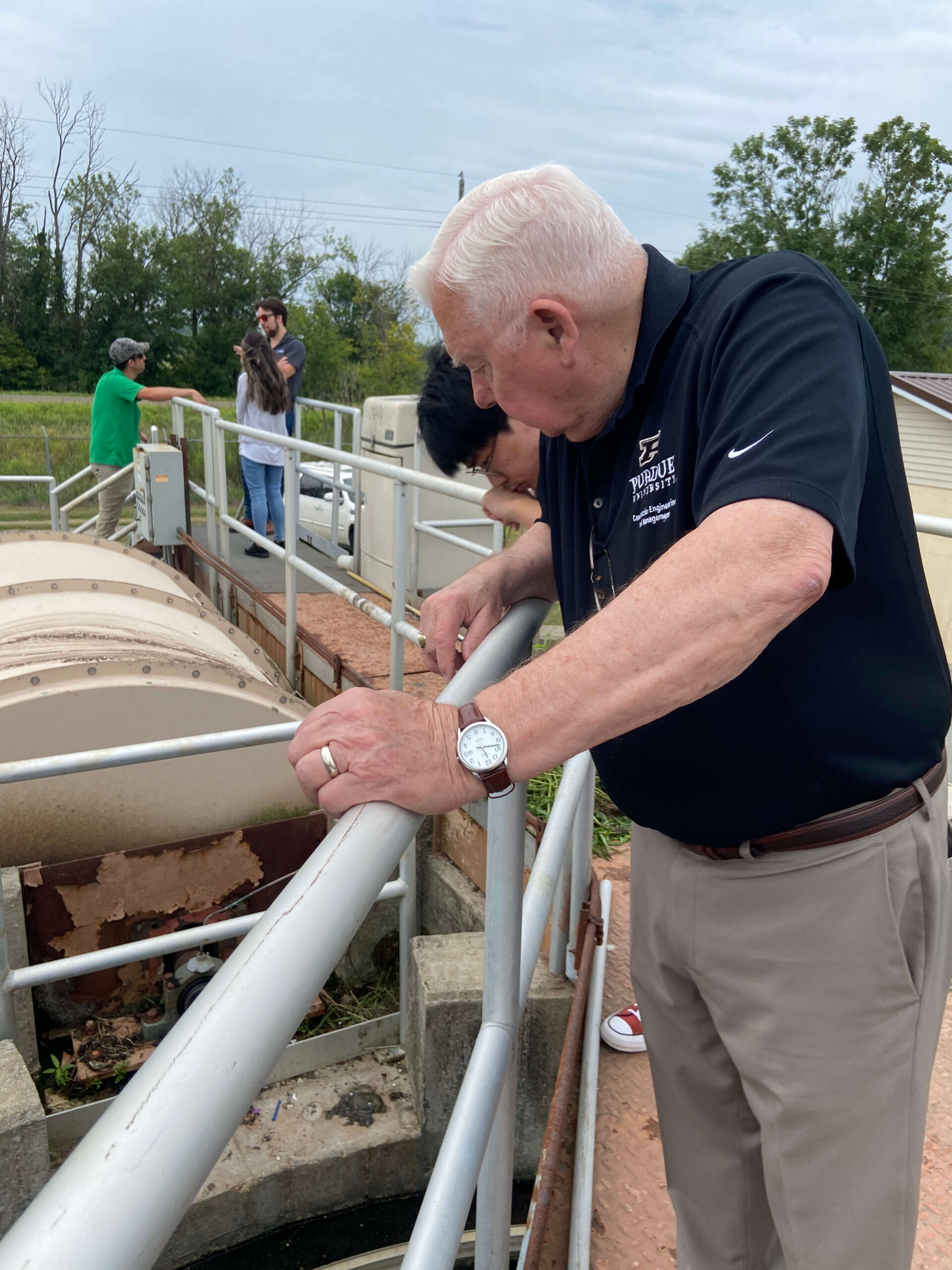
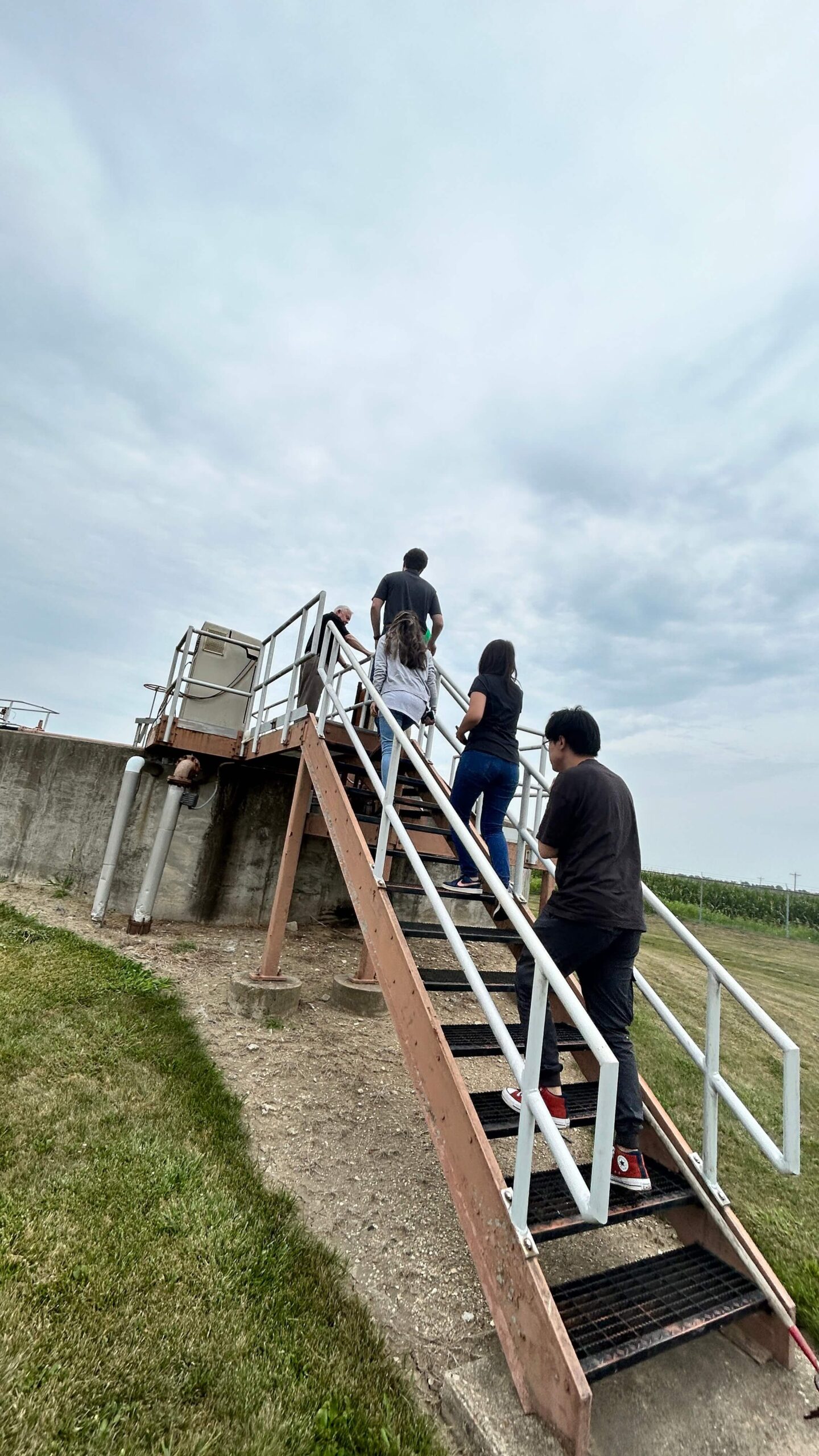
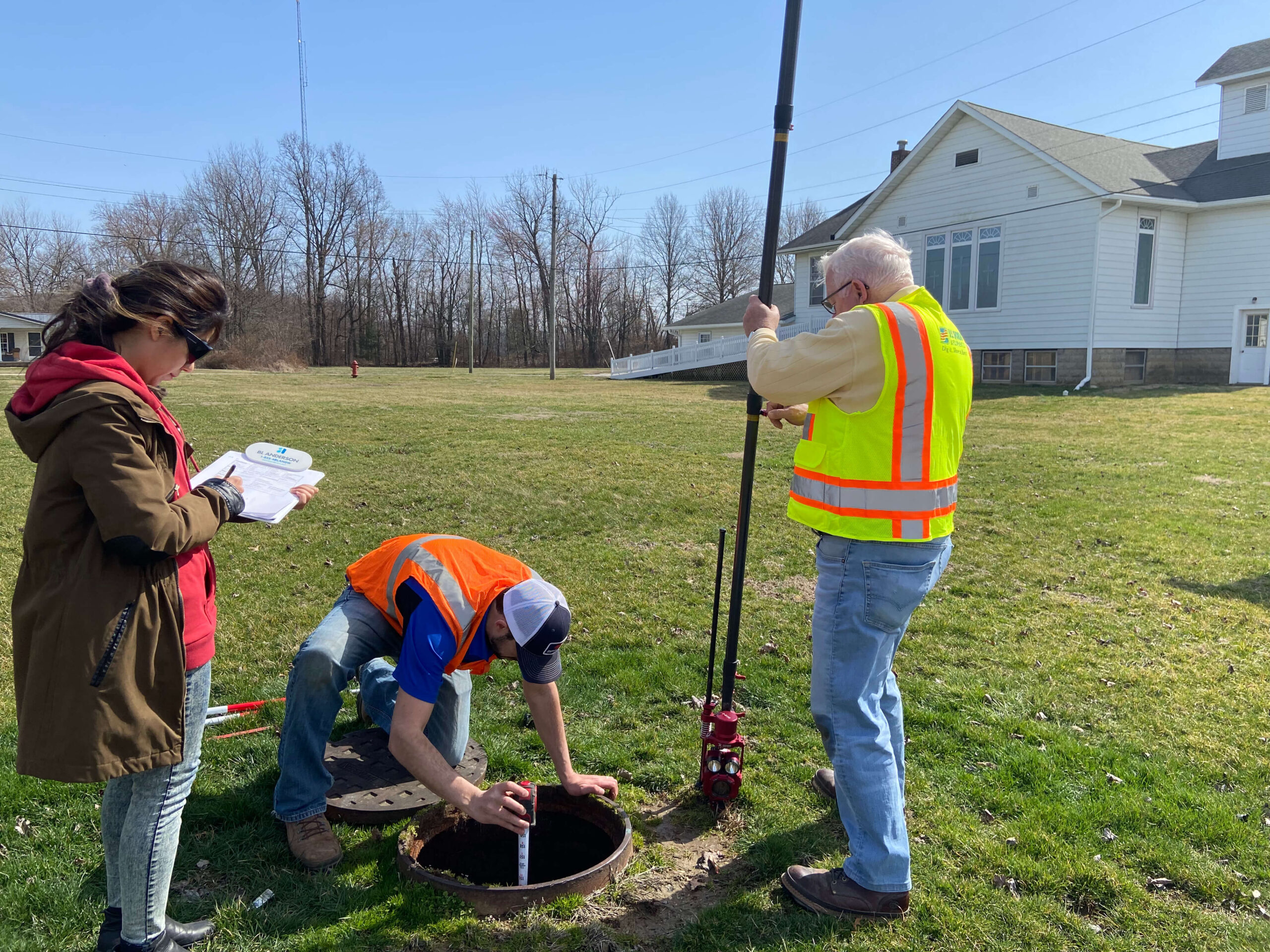
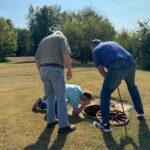
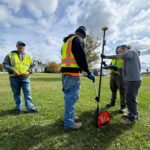
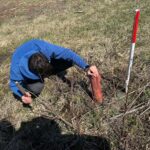
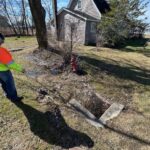
- Preliminary fieldwork: Manhole checks, network alignment confirmation, water plant reconnaissance, and initial I/I (infiltration & inflow) analysis to identify key issues.
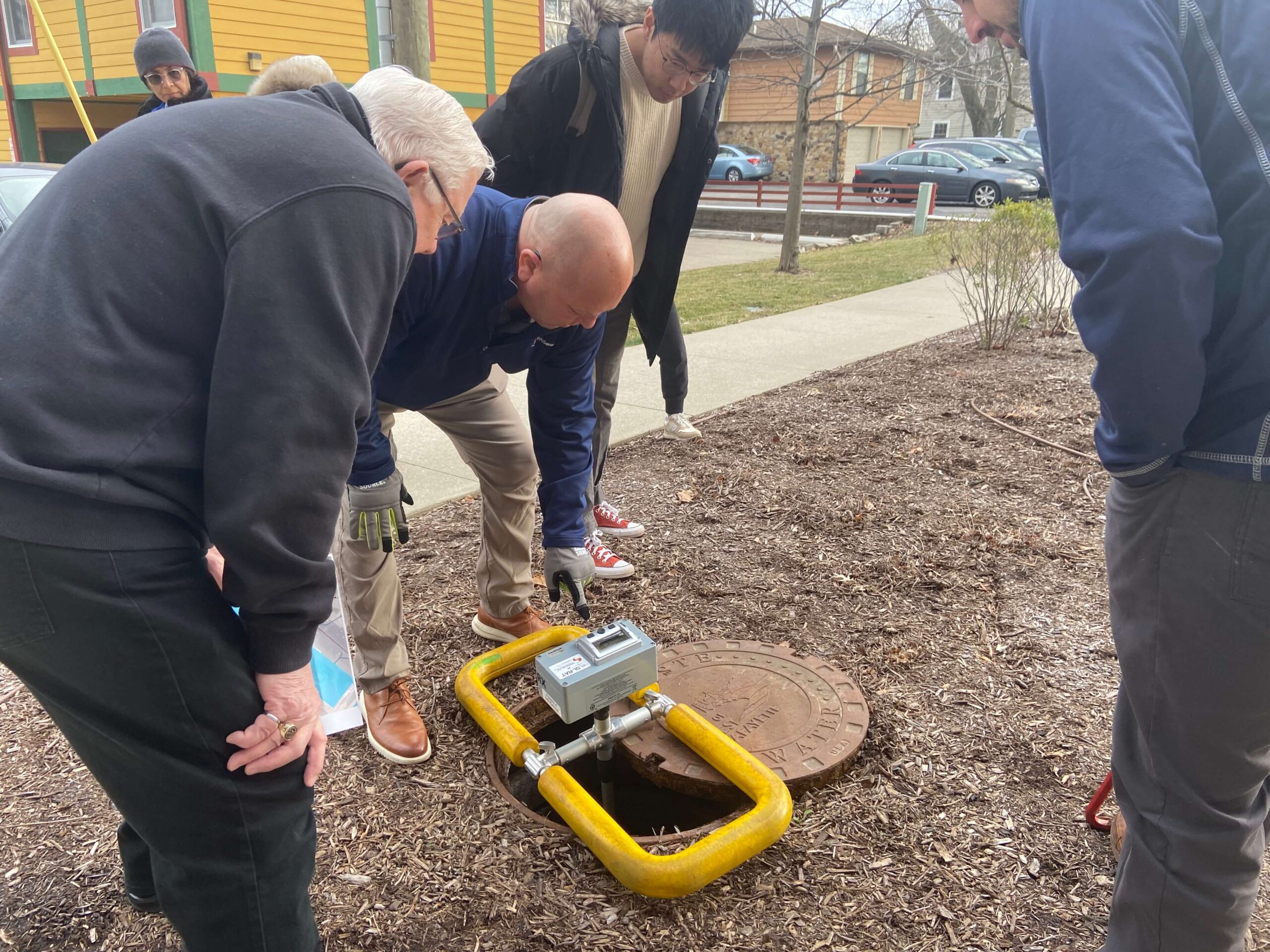
- SL-RAT acoustic screening: InfoSense and AIRW rapidly screened ~90% of the wastewater collection system, producing color-coded GIS blockage maps.
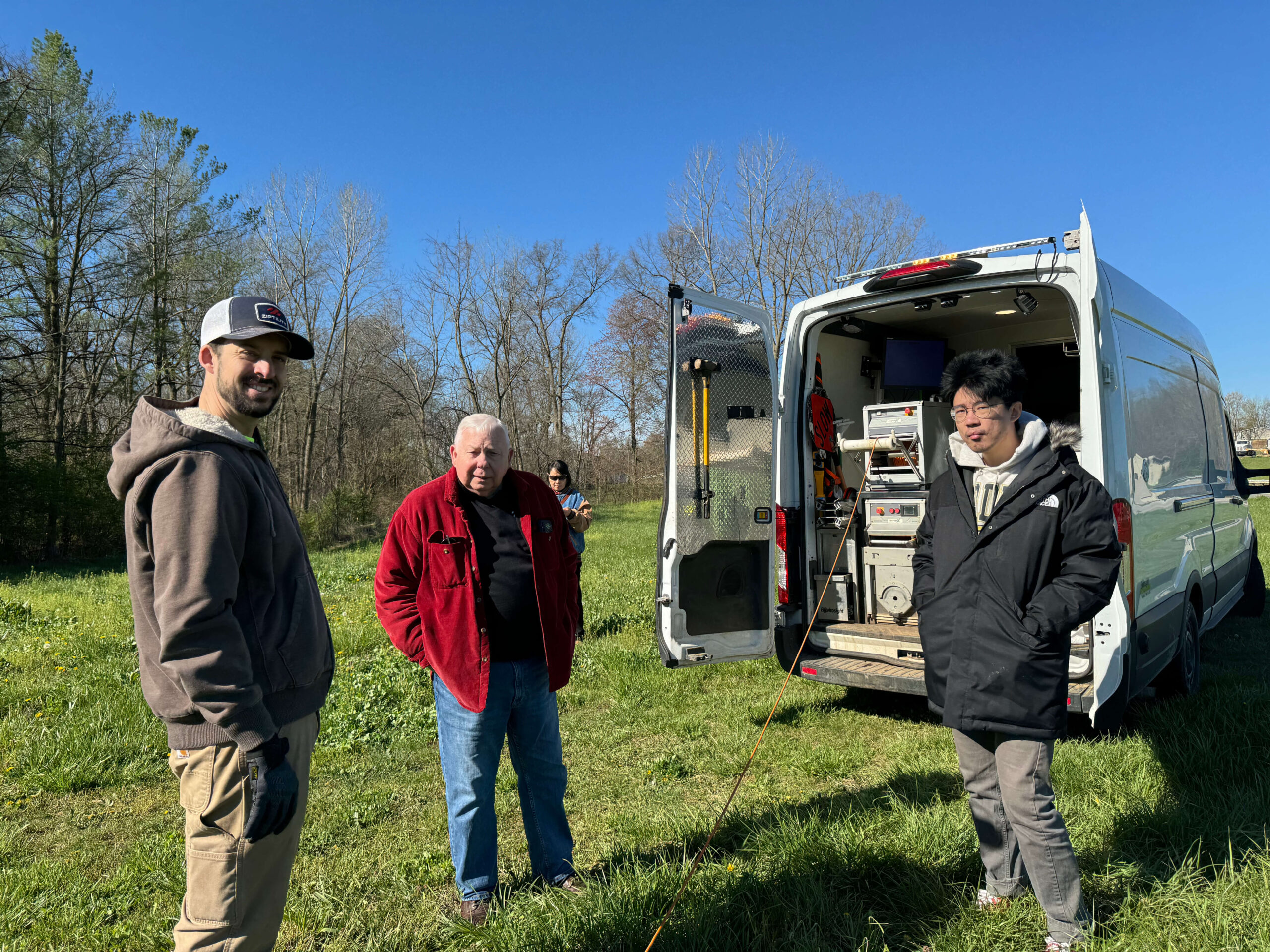
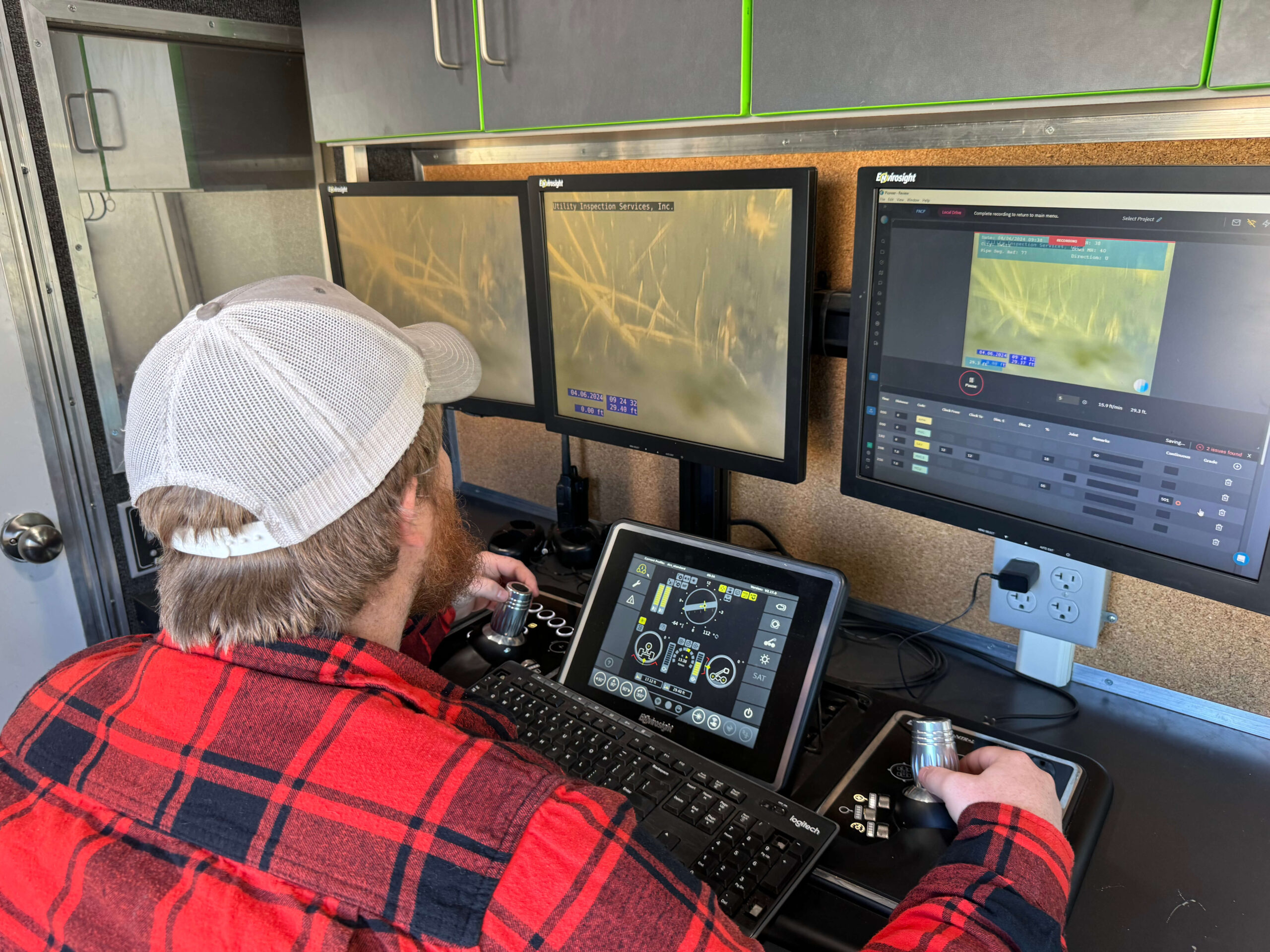
- CCTV & manhole inspections: Utility Inspection Services (UIS) inspected critical segments and laterals, identifying structural defects and potential blockage points.
- AI + satellite asset location: 4M Analytics produced comprehensive subsurface asset maps and geodatabases—the first such application in Indiana.
- Expert contributions:
- Adam Hershberger: Asset data gathering, GIS updates, multi-round meetings and fieldwork.
- George Kurz: In-depth I/I analysis—magnitude, impacts, cost, and payback.
- Jeff Farmer (operations contractor): Practical insights on daily operations, data practices, and energy-reduction strategies.
- Education & workforce development: Purdue’s Asset Management of Underground Infrastructure (AMUI) course used the project as a core case. 22 students in 5 teams produced AMPs, with guest lectures by Ross Waugh, Kurt Wright, Gregory Baird, etc., integrating asset management with advanced inspection technologies.
- Interim AMP: The technical team synthesized student work with volunteer-phase data and expert input to create the Switz City Interim AMP. Conservative by necessity (limited full-system condition data), it still provided a robust framework for the final plan.
- Community trust: Multiple briefings to the Town Council, operators, and residents built local support by explaining AMP’s value for compliance, funding, and long-term operations.
The core value of this phase lay not only in technical and data foundations but also in forging a cross-sector collaboration model and community trust—critical for the funded execution that followed.
Formal Execution Phase (Jul 2024–July 2025)
In July 2024, the project received $650,000 from IFA—$250,000 to develop a comprehensive asset management plan and $400,000 for urgent Town of Switz City repairs and system upgrades—ushering in a funded, systematic execution stage.
The focus shifted from “framework and foundations” to deep inspections and implementation mobilization, targeting data-driven decisions and precision investments to quickly improve system condition and fully support the final AMP.
Core tasks and technical actions
- Systematic leak detection (aligned with annual water audit):
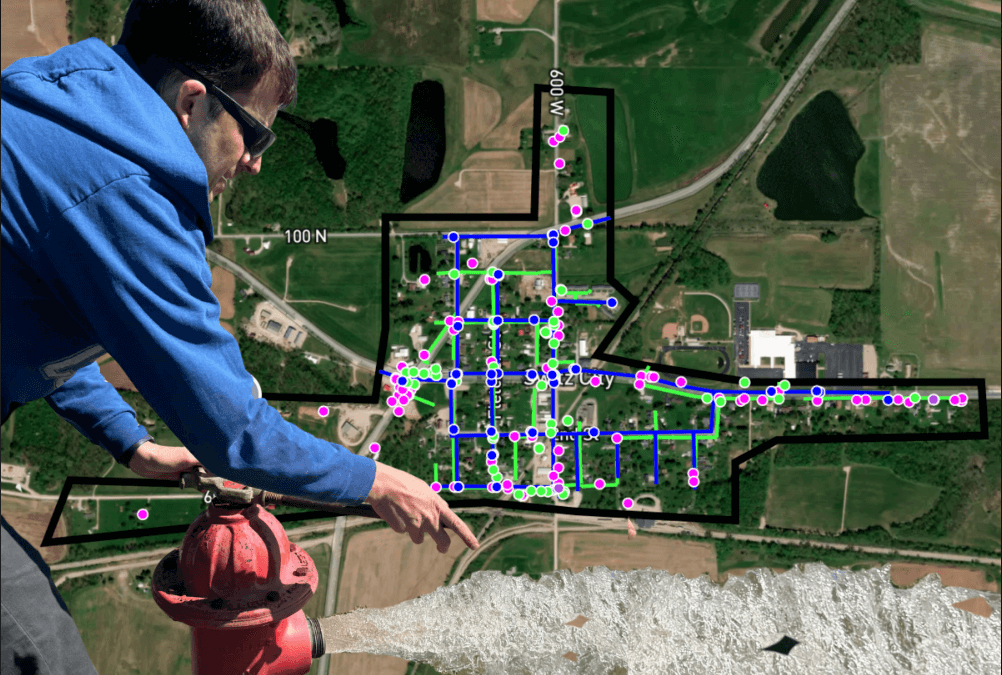
In Jan 2024, with AIRW’s help, town-wide acoustic surveys of hydrants and surface patrols identified three active leaks; The project began with a recommendation to replace aging water meters. As the planning matured, the team proposed advanced upgrades, including ultrasonic meters with integrated leak detection and improved tracking at both weekly and annual levels to support Non-Revenue Water (NRW) reduction. - ACE Pipe Cleaning: Cleaning + CCTV + Smoke Testing + Manhole Survey:
Sep 2024: Priority segments cleaned and CCTV-inspected (previously “missing” manholes located).
Oct 2024: System-wide smoke testing identified missing/broken cleanout caps, vent defects, private lateral issues, and structural defects; priority repairs were proposed in Fletcher/Chestnut, Hwy 54, Meadowview, etc. - ADS flow monitoring (Sep 2024–Jan 2025):
Meters at three key points captured flow and storm events to quantify I/I patterns and magnitude, informing risk assessment and network optimization. - Hydrant flushing & booster station assessment (Mar 2025):
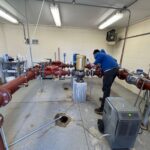
Inventory of hydrants and system flushing confirmed normal pressures, flows, and recovery; booster station structures, pumps, and SCADA reviewed with O&M advice. - Town Elevated Tank inspection (Mar 3–14, 2025):
200,000-gal multi-leg steel tank: exterior coating Fair with localized peeling/biofouling; interior lining Good, but bottom sediment requires cleaning. Recommended 1–3 yrs. exterior maintenance and 8 –10 years interior chemical cleaning/mixer. - Independent engineering & facility assessments:
- George Kurz: Engineering analysis of I/I with “multiple-evidence convergence” prioritization and post-construction verification monitoring.
- Kurt Wright: WWTP site assessment identified structural risks, operational bottlenecks, and aging components; findings and upgrade recommendations were integrated into the AMP.
- Financials & rate structure (WFA):
Affordability and rate analysis produced 20-year funding scenarios and rate strategies to support “leak reduction + facility renewal + AMI/ultrasonic meter replacements.” - Energy efficiency (Feb 2025):
Profiled energy/ demand charges; recommended LED retrofits, quick-connect backup generation, and routine leak detection to reduce unnecessary pump cycling; set mid- and long-term goals. - Quality control & data integration:
Smart Views performed QC on PCA data to meet industry standards; the team integrated CCTV, I/I, WWTP, financial, energy, and tank/hydrant assessments into the AMP’s technical chapters and project lists. - Stakeholder coordination:
The core execution team (BAMI-I, AIRW, BFU) held 15+ stakeholder meetings for progress, data reviews, priority setting, and resource alignment; ongoing engagement with the Town Council and operators aligned plans with community needs and allowed responsive reprioritization. - Integration into the final report:
All inspection, analysis, and assessment results were incorporated into the 2025 AMP, including:- Condition results and risk-priority;
- Targeted programs for I/I, WWTP, pump stations, and meters;
- A 20-year M/R/R plan (maintenance, repair, replacement);
- Funding pathways and rate adjustments.
These actions not only advanced local system improvements but also provided a useful reference standard for small systems statewide.
System Diagnosis: A Comprehensive Assessment
After multiple rounds of data collection, inspections, and evaluations across both phases, Switz City’s water and wastewater systems were, for the first time, comprehensively assessed and documented. The results provided a clear picture of system conditions, highlighting the spatial distribution of defects and quantifying key health indicators.
With four months of ADS flow monitoring, George Kurz’s I/I analysis, and InfoSense acoustic screening of approximately 90% of the collection system, a relatively complete understanding of system performance emerged.
A water audit revealed that between 2019–2023, non-revenue water losses rose from $60,428 to $107,941—accounting for 78.6% of the system’s total increase over that period. The Infrastructure Leakage Index (ILI) reached 16.86, far exceeding the industry benchmark of 3.0, indicating severe leakage. For a town with a daily demand of only 120,000 gallons, such losses represent not only wasted resources but also a heavy fiscal burden.
The wastewater system faced similar challenges: 46% of WWTP loading was due to I/I—groundwater and stormwater that should not enter the system—significantly raising treatment costs and operational stress.
A comprehensive assessment found that 32% of critical infrastructure was in high-risk condition. Many pipes, pump stations, and process units—installed in the 1970s–80s—are at or beyond their design life. CCTV inspections revealed previously unlocatable breaks and structural defects, while Kurt Wright’s detailed WWTP revealed critical gaps in equipment performance and process control requiring targeted upgrades.
Together, these datasets provided the foundation for targeted solutions. As BAMI-I Project Director Dr. Tom Iseley noted: “We aim to give Switz City a long-term plan grounded in real data.”
Capital Improvement Plan (CIP) and Funding Overview
Building on the comprehensive assessment, the team developed a 20-year CIP with supporting funding strategies, following risk-based prioritization to direct limited resources toward assets with the greatest impact on safety, compliance, and operational efficiency.
Core objectives
- Reduce NRW and I/I — phased pipe renewal, smart meter deployment, and repair of illegal connections and leakage points.
- Extend critical asset life — priority repairs and protections for high-risk segments and structures to defer large-scale replacements.
- Optimize O&M costs — combine energy-efficiency measures (LEDs, pump efficiency) with routine monitoring to lower energy and maintenance costs.
Priority investment areas
- Water system: System-wide ultrasonic smart meters and renewal of high-leakage segments.
- Wastewater system: Renewal/lining in high-I/I areas, manhole rehabilitation, pump station upgrades.
- Cross-system improvements: Energy optimization, sustainable operations, and institutionalizing SL-RAT, CCTV, and flow monitoring.
The CIP is tightly coupled with funding pathways, providing a clear roadmap and measurable targets for grant/loan applications, project delivery, and regulatory compliance—not just a project list, but a long-term strategy for sustainable infrastructure management.
Funding & Implementation: 20-Year CIP and First-Year Rate Actions
CIP investments are grouped into six categories: long-term compliance, critical renewals, system expansion, regionalization opportunities, technology & energy upgrades, and climate resilience. With comprehensive risk/criticality scoring, projects are prioritized high/medium/low across a 20-year schedule.
- Phase 1 (2026): Risk control and system stabilization—deploy smart meters and data integration for continuous monitoring and pinpointing issues; renew key facilities (WWTP core equipment—pumps, critical valves, effluent metering), high-risk pipe segments, and major I/I sources; launch top-priority projects and set annual data/ performance tracking.
- Phase 2 (2027–2029): Systematic pipe renewal and pump station upgrades to progressively cut I/I and leakage, ensuring resilient operations under peak loads and extreme weather.
- Phase 3 (2030+): Institutionalize preventive maintenance and periodic assessments; optimize energy profile and unit process efficiency; continue pushing leakage and I/I toward reference levels, and prepare for future expansion and climate adaptations as funding and policy allow.
Financial sustainability is pivotal. Glenn Barnes from Water Finance Assistance (WFA) evaluated Switz City’s finances and proposed a phased strategy that spreads the $3.82 million (20-year) investment into annual budgets and diversifies funding sources, including SRF/state loans, operating revenues, and grants.
Collaboration & Governance: Many Hands Driving “Small but Excellent” Change
The AMP is the product of multi-party collaboration. The coordinating body set overall direction and methodology; the on-the-ground team contributed operational know-how and local support; academia supplied analytics and research methods to ground the plan in both science and practice.
Technical support spanned flow monitoring, storage facility assessment, network inspections, and data quality control. Specialist consultants provided deep dives on I/I, WWTP optimization, and financial feasibility, aligning technical solutions with funding.
At project closeout, Heather Himmelberger from Southwest Environmental Finance Center (SWEF) served as an independent reviewer of AMP technical content and execution plans.
Across the project, the team held 15+ stakeholder meetings, forming a “Problems → Solutions → Funding” loop: early identification through field data and risk analysis, mid-stage cross-disciplinary solution design, and late-stage financial/management alignment for delivery. This model leveraged complementary strengths to advance a “small but excellent” system transformation.


Education & Outreach: Bringing a Real Project into the Classroom
Another key contribution was education and workforce development. Purdue transformed this live project into a valuable teaching resource, giving students hands-on experience and cultivating professionals with modern asset-management mindsets.
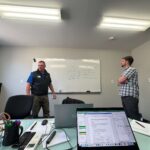
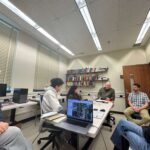
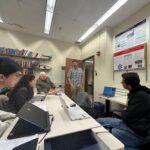
In Fall 2023, 22 graduate students in the Asset Management for Underground Infrastructure course formed five teams to develop complete AMPs for Switz City under IFA principles—working with imperfect data, resource constraints, and competing objectives, just like real practice.
In Spring 2024, the Pipeline Condition Assessment & Integrity Management course deepened understanding of SL-RAT, CCTV, satellite imaging, and field measurements through lectures and cases.
This educational model benefited the project team as well: dialogue between veteran engineers and inquisitive students often sparked unexpected innovation.
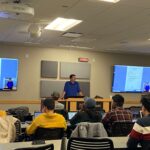
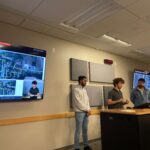
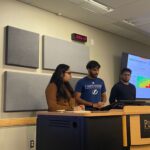
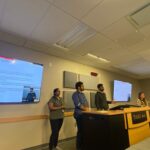
In addition to classroom integration, the Switz City AMP was also shared broadly across professional and regulatory forums. The project was presented to the Indiana Senate Utility Committee and Underground Infrastructure Conference, the Alliance of Indiana Rural Water conference, and at other group meetings. Each of these venues provided opportunities to highlight the project’s methods, lessons, and practices—further raising awareness of asset management and inspiring other communities to take action.
Implementation Readiness
With the AMP finalized, Switz City has entered implementation. Of the $650,000 budget, $400,000 for construction is in place, and some critical works—smart meter replacements, selected high-risk renewals/repairs—have already begun. Remaining construction is being sequenced and will proceed in phases as funds and resources are secured.
The team recognizes that the plan-to-execution transition is the biggest challenge. Even the best plan must be executed accurately to deliver outcomes. BAMI-I and AIRW will continue to provide technical support and project management to ensure each implementation step adheres to the AMP.
Toward Replication
With Indiana’s evolving regulatory landscape, HB 1459 shifts asset management from encouragement to mandate, with deep statewide implications.
Switz City’s experience has drawn industry attention as a realistic path for small utilities to plan and implement systematic improvements under resource constraints. While conditions vary and direct copy-paste is unlikely, the project’s methods, processes, and collaboration model offer a foundation for broader adoption.
Building on these lessons, the team proposed I-WIIC (Indiana Water Infrastructure Innovation and Collaboration)—an industry collaboration platform to accelerate innovation and cooperation, especially for small and mid-sized utilities facing aging assets, funding gaps, limited technical capacity, and tighter regulation. WIIC’s core idea is cross-sector collaboration—associations, academia, technology vendors, and operators—to share knowledge, reduce costs, and speed deployment. Priorities include advancing inspection/asset-management methods, providing standardized frameworks and practice manuals, building training pipelines, and conducting multi-community pilots to validate and codify replicable models. The long-term goal is a statewide/national network enabling small utilities to access advanced technology, management methods, and funding channels.
Within WIIC, the team envisions additional AMP pilot developments across varied utility sizes and the drafting of a Manual of Practices spanning data collection, technical evaluation, financial planning, and project delivery—an actionable pathway for small utilities.
Conclusion
Looking back from concept to completion, the most striking feature is the collective persistence toward improving the town’s infrastructure—from IFA’s Jim McGoff’s support, to Dr. Tom Iseley’s coordination, to George Kurz’s analyses, to Purdue students’ learning and contributions.
Completion of the AMP marks Switz City’s shift from “problem identification” to “solution implementation.” In the coming years, the team will watch this sub-300-resident town pursue improvements: Will water loss drop as planned? Will I/I be effectively controlled? Will high-risk assets be renewed on time? Time will tell.
The project’s meaning extends beyond one town. It shows other small communities that with a systematic approach, multi-party collaboration, sound planning, and persistent execution, infrastructure challenges can be improved. While contexts differ, the underlying methodology is transferable.
As BAMI-I’s mission states: “Extend asset life by sound methods, improve system efficiency, protect public health, and enhance quality of life.” Finishing the Switz City AMP is an important step toward that goal. Uncertainties remain, but at least there is now a data-driven plan for action.
Acknowledgments
Core Partners
- Buried Asset Management Institute–International (BAMI-I)
- Underground Infrastructure Team (UIT), Purdue University
- Alliance of Indiana Rural Water (AIRW)
- Bynum Fanyo Utilities, Inc. (BFU)
Funding Support
- Indiana Finance Authority (IFA)
Technical Support & Data Collection
- Ziptility, Inc.
- George Kurz
- Kurt Wright
- ADS Environmental Services
- ACE Pipe Cleaning Company
- InfoSense
- Utility Inspection Services (UIS)
- 4M Analytics
- Smart Views, LLC
- Water Finance Assistance (WFA)
- USG Water Solutions
Education & Knowledge-Sharing Contributors
- Ross Waugh, Waugh Infrastructure Management Limited — AMP development expert
- Smith F. Rangel, M.Eng. — NASSCO Certified Trainer
- Adam Hershberger — AIRW expert (formerly Ziptility)
- Purdue AMUI graduate students — contributors to the initial AMP drafts
- Glenn Barnes, Water Finance Assistance
- Kurt Wright, Independent Consultant
- Chris Callahan & Alex Churchill, InfoSense
- Joseph Eberly, 4M Analytics
- Jim Harris, Independent Consultant
Special Thanks
Heather Himmelberger, Southwest Environmental Finance Center — for her expert review and practical recommendations that strengthened the structure and clarity of this plan.
Switz City Town Council and residents — for their trust, collaboration, and support throughout every phase of the project.